Welcome to The Analogy Library
What if your patients could finally picture what you're trying to explain?
You understand the body. You understand the treatment. You understand why the next step matters. But your patient doesn't have your education, experience or vocabulary.
The Analogy Library gives you another way to explain it. Simple comparisons. Familiar pictures. Memorable conversations — created from more than 30 years and 25,000 patient conversations.


The Translation Gap
You said it clearly.
But did they understand it clearly?
Patients aren't sitting in your treatment room with your education, vocabulary or years of experience. A perfectly accurate explanation can still fail if the person listening can't create a picture from it. Analogies build that picture.
Your education, training and clinical experience.
A technically accurate explanation.
Words without a picture to put them in.
Where the meaning can quietly slip away.
Confidence depends on understanding.
Then an analogy appears — and the line connects both sides.
When patients can picture it, they can understand it. And when they understand it, they're more confident about what comes next.
The "Aha!" Moment
From "Huh?" to "Ohhh… now I get it."
The Explanation
"Your parasympathetic nervous system is under-regulated, so your tissues are holding compensatory hypertonicity and your recovery is being down-regulated by sustained sympathetic tone."
Perfectly accurate. It simply assumes knowledge the patient doesn't have.
The Picture
"Think of your nervous system like a garden. Right now it's been kept tense and dry, so nothing relaxes. This work is the water and the sunlight — we're giving it the conditions to settle and recover."
The same truth. A picture the patient can hold onto.
Why Analogies Work
Give their brain somewhere to put the information.
Turn an unfamiliar concept into something familiar.
Make complicated information easier to process.
Create a mental picture patients can recall after they leave.
Make the reason behind the next step easier to understand.
The Analogy Shelves
What will you find on the shelves?
Each shelf holds a type of conversation you have every week — gathered from decades of patient visits.

Try One On
Sometimes one sentence changes the whole conversation.
Without an analogy
"You need to keep your shoulder within a pain-free range and avoid end-range loading so we don't aggravate the inflamed supraspinatus tendon during the acute phase."
Clinically correct — but hard to picture, and easy to forget by the time they get home.
With an analogy
"Your tendon is like a kettle that's just boiled — it's hot right now. We don't pour more water in or move it around roughly. We let it cool first, then we start using it again."
The same practitioner. The same knowledge. A picture they can carry home.
Analogies don't replace accurate clinical explanations — they help them land.

25,000+ conversations → a whole lot of "Aha!" moments.
Collected, not created overnight
This library took 30 years to build.
"I didn't sit down one afternoon and decide to write a collection of clever analogies. They grew out of conversations. Thousands and thousands of them."
"I watched patients' faces. I noticed when an explanation landed — and when it didn't. I changed a word. Tried a comparison. Watched for that little expression that said: 'Ohhh. Now I understand.'"
Over more than 25,000 patient conversations, those moments taught me something important: knowing isn't enough. We have to know how to communicate what we know.
Deborah Housley — Business Communication Warrior
The Toolbox
Your communication toolbox just got a lot bigger.
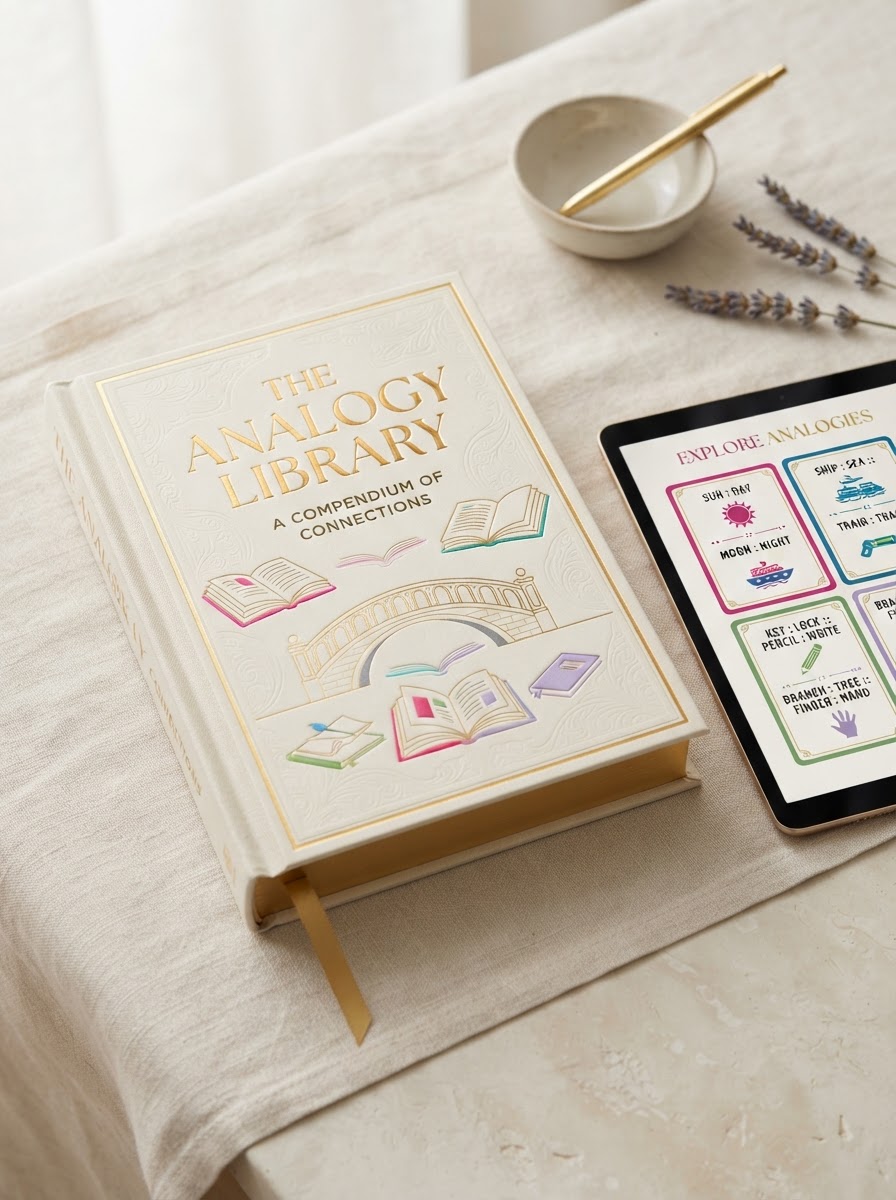
- 📚A growing library of ready-to-use analogies, organized by the conversations you actually have.
- 🗂️Colorful analogy cards you can keep on your device and pull up between appointments.
- 🌿Organized by shelf — the problem, progress, consistency, healing, setbacks and home care.
- ✍️Frameworks that train your brain to notice and build your own comparisons, too.
The Ripple Effect
One clearer explanation can travel farther than you think.

- 2Better understanding
- 3More confidence
- 4Clearer next step
- 5Stronger patient relationship
- 6A practice that grows naturally
The Librarian's Desk
Ask the Librarian
The Doors Are Open
You already know what you know.
Now learn another way to say it.
Give your patients explanations they can picture, understand and remember. Because better communication doesn't begin with saying more. Sometimes it begins with finding the right picture.

Next on your Build journey
There's more to building a business than what we say to our patients.
The words we use with ourselves quietly shape what we build next.
The Analogy Library · a ThisWorks365 BUILD world